
Reviewed · ORLANDO CLEAR KAYAK TOURS
Florida Bioluminescent Kayak & Paddle Board Adventure
One of Florida’s best after-dark nature experiences happens in the water, not under the theme-park lights. On this Indian River Lagoon bioluminescent tour, every paddle stroke can stir blue-green sparks in summer, while winter brings glowing comb jellies and nocturnal wildlife.
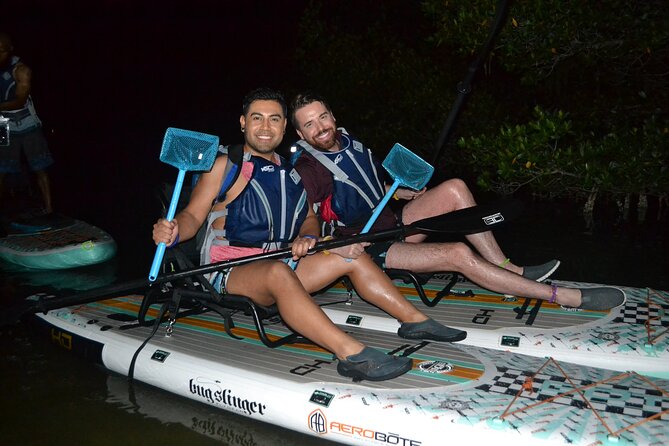
I like the choice between a stable kayak-mod and stand-up paddleboard, and I like the small average group of about 12 people. The guide-led pace leaves room to explore rather than simply follow a crowded procession. The main caution is that the glow is natural, so it can range from faint to spectacular, and mosquitoes can be fierce before you reach the water.
Key points to know before booking
- Season controls the show: May through early October is the main season for glowing dinoflagellates, while early October or November through April is best for comb jellies.
- You choose your craft: Pick a stand-up paddleboard or a more comfortable, stable kayak-mod.
- The meeting point is in Merritt Island: You will meet at 951 Kiwanis Island Park Road, about a short drive from Orlando and Cocoa Beach.
- The outing lasts about 1 hour and 45 minutes: It begins and ends at the same launch point.
- The guide matters: Nate, Jeff, and Jess are among the guides praised for safety help, local ecology, and friendly instruction.
- Photos and bug spray are included: Bring your own repellent too if mosquitoes usually find you first.
Why the Indian River Lagoon glows after dark
Bioluminescence is light produced by living organisms. In summer, the water can contain dinoflagellates, tiny plankton that flash when disturbed. A paddle, hand, or fist moving through the water may create a brief blue spark. The effect is often easiest to appreciate when you stop, scoop water into your hand, or make a slow sweep with your paddle.
This is not a permanent blue river. The glow comes in patches and changes with conditions. One outing might produce faint pinpricks, while another brings bright trails behind every stroke. That uncertainty is part of the appeal, but it also means you should not expect the exact intensity shown in promotional photographs.
In the cooler months, the main attraction changes to bioluminescent comb jellies. These small creatures can look like moving beads or tiny glowing shapes in the dark water. They are not the same experience as a strong summer plankton display, but many people find the jellies just as fascinating because you can watch living creatures drift and glow.
October is a transition month. You might see late-season dinoflagellates, early comb jellies, or both. If the type of glow matters to you, check the latest seasonal update before selecting your date.
More Bioluminescence Kayak Tours in Orlando:
- LED Glow in the Dark Clear Kayak or Paddleboard in Paradise
★ 5.0 · 157 reviews - Clear Kayak Glow in the Dark Tour Through Winter Park
★ 5.0 · 102 reviews - Orlando: Bioluminescence Kayak Tour
★ 4.5 · 70 reviews
Choosing between a kayak and paddleboard
You can select a stand-up paddleboard or a stable kayak-mod. The kayak-mod is described as more comfortable and stable than a traditional kayak, which makes it a sensible pick if you are new to paddling or want to focus on the night sky instead of balancing.
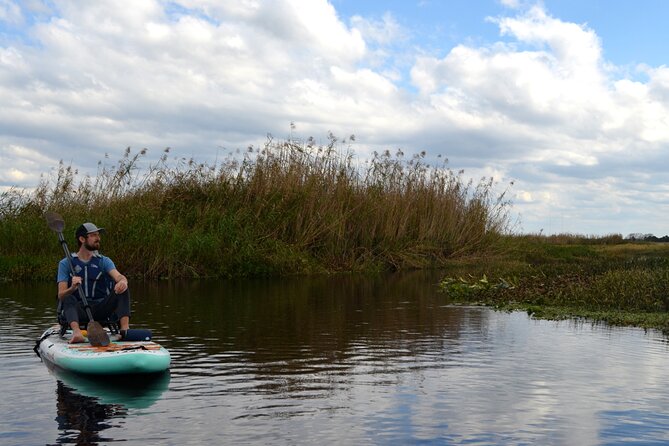
A paddleboard gives you a higher view and a more open feel. It also asks more of your balance, especially if the water moves or you are tired. You do not need to be an expert, but this is still an active outing. You operate your own craft and paddle for the full session.
The equipment receives strong praise, especially the comfort of the kayak-mod. Families with first-time paddlers have completed the outing successfully, and children can participate according to the supplied information. Still, you should be comfortable with a physical activity and able to manage your own craft.
The equipment has a maximum weight of 285 pounds. If you are above that limit, contact the operator before booking to ask about possible arrangements. Do not wait until arrival, since the available equipment may not fit your needs.
From Kiwanis Island Park to the night water
The meeting point is 951 Kiwanis Island Park Road in Merritt Island, Florida. The launch area is convenient for a day trip from Orlando or Cocoa Beach, but allow enough driving time for evening traffic and for finding the correct departure point.
The operator uses a daily updates page for the current launch site and weather conditions. Your ticket contains instructions for checking it. The launch location can change, so do not rely only on an old map pin or a message you read several days earlier.
You will receive booking confirmation, and the operator may send updates through the Viator message center. Give accurate contact details when you book, especially if you are using an international phone number. The operator states that it may not be able to call international numbers, so check your messages on the day of the tour.
At the launch, expect to prepare for a water activity rather than a polished attraction with a large reception area. Bug spray is provided, and waterproof phone pouches are available according to the tour information and past outings. I would still apply repellent before leaving your car and keep extra spray handy. Mosquitoes can be intense near the launch, though they tend to be less bothersome once you are moving across the water.
What the 1-hour-45-minute outing feels like
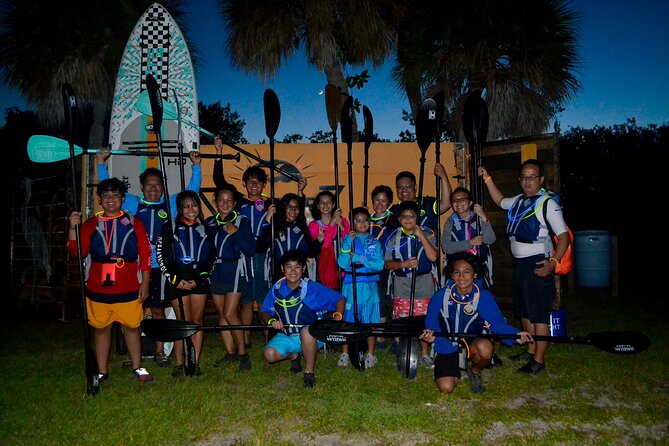
The experience starts with getting set up in your chosen kayak or paddleboard. Your guide explains how to handle the craft and helps the group get moving safely. The group is capped at 12 people, with about 12 as the usual size, so you should receive more attention than on a large commercial paddle.
Once on the lagoon, the pace is relaxed. You paddle through the dark water while the guide points out places to look and explains what creates the glow. A good guide can make a major difference here because the light may not be obvious at first. You need to know when to stop, where to look, and how to move your hand or paddle to stir the water.
The route is not presented as a series of fixed sightseeing stops. It is more of a guided search across the lagoon. You might pause in a promising patch, make a fist in the water, or scoop water into your hand to see the organisms more closely. Some outings produce glowing trails behind the paddles, while others bring only small flashes.
The dark setting adds more than the bioluminescence. Depending on timing and conditions, you may see the stars, catch a sunset at an earlier departure, or notice nocturnal wildlife. Comb jelly outings can include sightings of stingrays, puffer fish, and horseshoe crabs, with NOQUA lighting systems used to illuminate wildlife without turning the outing into a floodlit boat ride.
Dolphins have also been seen near the route, but this is not a dolphin-watching tour. Treat such sightings as a lucky extra, not something included in the promise of the experience.
At the end, you paddle back to the same meeting point. The entire outing takes about 1 hour and 45 minutes, which is long enough to settle into the darkness without taking up your whole evening.
More Clear Kayak Tours in Orlando:
- Rock Springs 2-Hour Glass Bottom Guided Kayak Eco Tour
★ 5.0 · 2,459 reviews - Glass Bottom Kayak Eco Tour through Rainbow Springs
★ 5.0 · 943 reviews - Glass Bottom Kayak Tours of Silver Springs
★ 5.0 · 580 reviews - Silver Springs Clear Kayak Manatee, Monkey & Wildlife Adventures
★ 5.0 · 419 reviews
Guides, safety, and the value of a small group
The operator’s guides bring different personalities to the experience. Nate is associated with biology, Florida water systems, local ecology, and regional history. Jeff is praised for explaining native plants and wildlife, while Jess has helped families with directions, clear instructions, and what to watch for in the water.
That variety matters because bioluminescence needs explanation. Without context, you may see a few sparks and wonder if that is all there is. A guide can show you how to make the water respond and explain why the display changes from one area to another.
Safety is another reason to choose a small group. You are still responsible for your own paddleboard or kayak, but the guide can keep the group together and respond to concerns. One outing turned back toward the launch point when some people became uncomfortable with the weather and wildlife. That decision reduced the route, but it showed the right priority: the guide will not force the full outing if part of the group feels unsafe.
The small-group format also keeps costs lower than a private tour while offering a more personal feel than a large fleet. The value is strongest if you care about the guide’s explanations, included photos, equipment, and the chance to explore at a calm pace. It is less compelling if you want a guaranteed, bright display or a long wildlife expedition.
The tour price is not provided here, so I cannot judge it against a specific dollar amount. In practical terms, your booking includes the craft, guide, bug spray, photos, and roughly 105 minutes on the water. Gratuities are not included, so budget for a tip if the guide provides good instruction and care.
Seasonal timing: summer plankton or winter jellies
From May through early October, the main target is dinoflagellate bioluminescence. This is the season for the classic paddle-through-glowing-water effect. The best moments can happen when you move your paddle slowly, trail your hand, or make a fist underwater and open it to release a burst of light.
The intensity is not guaranteed. Weather, water conditions, moonlight, and natural changes in the organisms can affect what you see. A bright moon or weak concentration of plankton may make the glow harder to notice. You should book this as a natural event, not a mechanical show.
From early October or November through April, comb jellies become the main attraction. These are often easier to appreciate as individual creatures, and the tour may also reveal stingrays, puffer fish, and horseshoe crabs. NOQUA lighting systems help you see wildlife in the dark.
Winter can be cooler and weather can cancel an outing, especially when wind makes paddling unsafe. Dress for an evening outdoors and check the same-day update before setting out. October offers the most uncertainty, but also the chance of seeing both forms of bioluminescence.
Weather, mosquitoes, and what to bring
The outing runs in rain unless thunder, lightning, or heavy winds make conditions unsafe. In severe weather, the operator may place the activity on a 30-minute hold. If conditions do not improve, you receive a refund according to the supplied policy.
This approach means you should keep your evening flexible. A light rain does not automatically end the tour, and some people find paddling in gentle rain memorable. Thunder, lightning, and strong wind are different matters, especially when you are on open water.
Mosquitoes are the most common comfort issue. Spray is provided, but I would apply it generously before you get dressed and again at the meeting point if needed. Long sleeves and long pants can help, though you should still dress for Florida’s evening heat.
Bring only what you can secure. A waterproof phone pouch is available, and photos of the excursion are included. The guide takes pictures, but delivery may require you to access the operator’s Memories page or contact the company if the photos do not arrive automatically.
You do not need to bring a large amount of equipment. The operator supplies the craft and safety-related items for the outing. Still, bring water, suitable clothing, and a way to change after paddling if you dislike sitting in damp clothes for the drive home.
Who will enjoy this most
I would recommend this outing to couples who want a quiet night activity, families with older children who can paddle, solo visitors who enjoy nature, and first-time paddlers looking for a guided introduction.
It also suits anyone who has already visited Orlando’s major attractions and wants something tied to Florida’s coastal ecology. The lagoon offers a very different kind of evening, with stars, dark water, wildlife, and a guide explaining the small organisms that create the light.
You should think twice if you need a guaranteed dramatic display, dislike insects, or do not want to paddle your own craft. You should also be ready for a possible change in launch location or start time if weather or the minimum group size requires it.
Free cancellation is available up to 24 hours before the start time for a full refund. Changes made inside that window are not accepted, and weather or minimum-participant cancellations offer a different date or full refund.
Should you book A Paddle in Paradise?
Book it if you want a small, active nature outing and can accept that the glow changes from night to night. The stable kayak-mod, included photos, practical gear, and guide-led explanations give the experience real value, especially for families and beginners.
For the brightest summer effect, aim for May through early October and check the latest bio update before committing. For glowing comb jellies and a chance to spot other night wildlife, choose the cooler season. If mosquitoes bother you, arrive prepared and wait in the car until close to launch time.
This is not a guaranteed light show. It is a search for living light in a Florida lagoon. On a strong night, that uncertainty pays off with glowing paddle trails and water that seems to answer your touch. On a weaker night, the guide, stars, wildlife, and peaceful paddle still shape a worthwhile outing, but you should book with realistic expectations.
FAQ
Where does the bioluminescent kayak tour meet?
The meeting point is 951 Kiwanis Island Park Road, Merritt Island, Florida 32952. The activity ends back at the same meeting point.
How long does the experience last?
The outing lasts approximately 1 hour and 45 minutes.
Can I choose between a kayak and a paddleboard?
Yes. You can choose a stand-up paddleboard or a stable kayak-mod, which is described as more comfortable and stable than a traditional kayak.
What can I see during the summer?
From May through early October, the main sight is blue bioluminescence created by dinoflagellates. Late-season comb jellies may also appear.
What can I see during the winter?
From early October or November through April, the main attraction is glowing comb jellies. You might also see stingrays, puffer fish, and horseshoe crabs illuminated with NOQUA lighting systems.
Is bug spray provided?
Yes. Bug spray is provided, though bringing or applying extra repellent is sensible because mosquitoes can be heavy near the launch area.
Are photos included?
Yes. Photos of the excursion are included. The operator directs participants to its Memories page if they need to access them.
What happens if the weather is bad?
The tour runs in rain unless thunder, lightning, or heavy winds make conditions unsafe. A severe-weather hold may last 30 minutes. If the tour cannot proceed, you are offered a full refund according to the stated policy.
Just added around Orlando
- Orlando International Airport MCO to Lake Buena Vista Resorts★ 4.5 · 15 reviews
- Orlando International Airport Transportation★ 5.0 · 17 reviews
- Old Town Entertainment District Attraction Tickets and Meal★ 4.0 · 36 reviews
- Gator Viewing Clear Kayak Springs Tour★ 5.0 · 17 reviews
- Skip the Line: Museum of Military History Ticket★ 4.5 · 37 reviews
- Dora Canal Wildlife Kayak Tour – Scenic Old Florida★ 5.0 · 4 reviews
- Ride in style from MCO to Lake Buena VIsta Resort Area★ 5.0 · 12 reviews
- Blue Springs Manatee Tours & Wildlife Adventure Orlando★ 5.0 · 11 reviews
Orlando Clear Kayak Tours, compared.
Rock Springs 2-Hour Glass Bottom Guided Kayak Eco Tour
Read our review →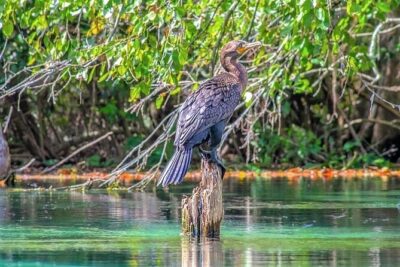
Glass Bottom Kayak Eco Tour through Rainbow Springs
Read our review →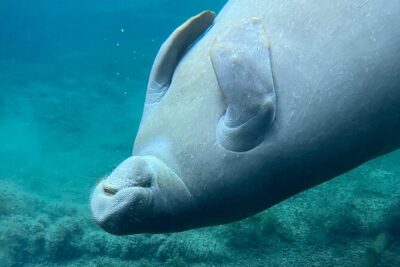
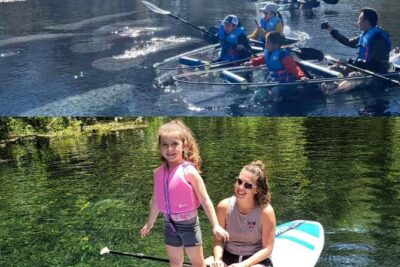
Silver Springs Clear Kayak Manatee, Monkey & Wildlife Adventures
Read our review →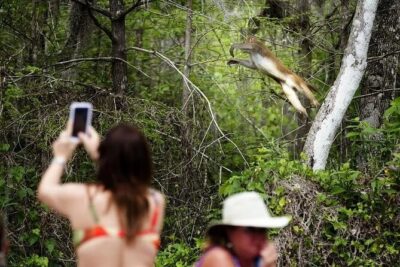


Sassy’s Silver Springs Kayak and Paddleboard Tours
Read our review →Browse the lists this tour appears in